Welcome to the special episode. Episode 7 gave you the concept map; the plan was to jump straight into Prompt. A viewer asked a question worth pausing for.
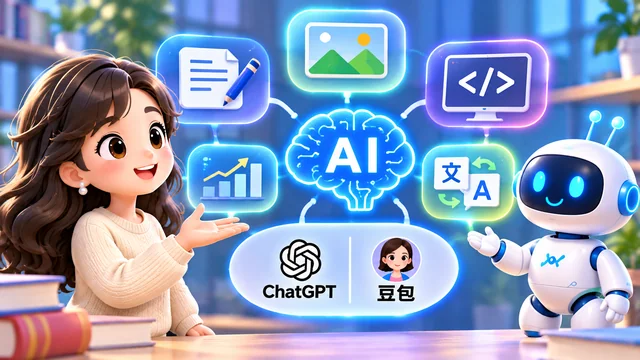
“AI can already write, draw, code, translate, analyse data, and help with pro tasks—so will students stop going to school and adults stop working?”
That question matters. Before the basic-concept series continues, we answer it here: why keep learning when AI looks so capable?
This is not a detour from the map—it is fuel for the ride. Episode 8 on Prompt lands better when you know why your words still count.
We will use one long metaphor—a fast horse—and one short example—checking AI-written code—to keep the answer concrete.
Machines changed work before
Look back before industrial machines—and before AI.

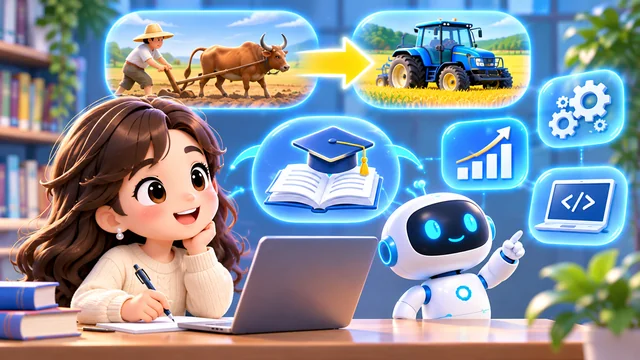
Farming once needed huge human and animal effort—ploughing, sowing, harvesting, exhausting and slow. Agricultural machines eventually did jobs many people used to share.
People still learned—how to drive equipment, repair it, or move into new trades. Machines reshaped work; they did not erase the need to study.
AI may be doing something similar now—except more of the load is thinking work, not only muscle.
Some learners trained for tractors; others opened shops or studied medicine. Change created new paths—not a world without students.
AI and “brain work”
Past machines moved soil; today’s tools move sentences, pixels, and numbers.
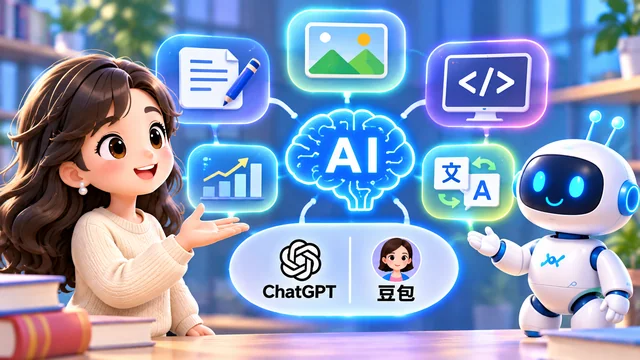
Early machines mostly spared our backs. AI increasingly helps with words, pictures, programs, languages, and messy datasets.
So do pros disappear? Not that simply. Tools change; they rarely delete every judgment call.
The better question is not “human or AI” but “human with AI”—who checks, who decides, who owns the goal.
Future headlines may not say “replace” so much as “redesign.” Your job description might change before your job vanishes.
That is why this special sits between the map and Prompt: concepts matter because you still steer.
Example: code with AI
AI can draft sites and scripts from a request. Does that end programming class?
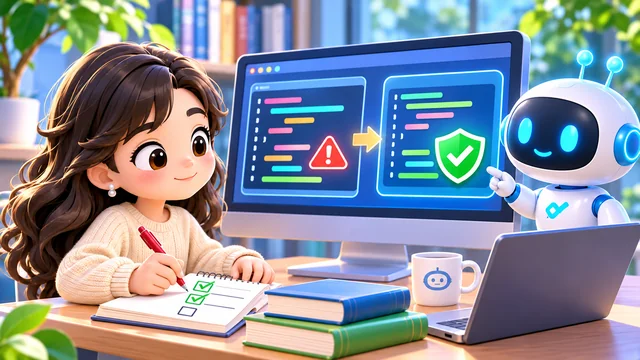
If you know zero development, it is hard to tell whether AI output is correct. Code may run yet hide security holes, slow paths, wrong data, or a feature you never asked for.
Skilled developers know what to assign AI, how to prompt it, how to review, and how to fix. That partnership is the future skill—not button-only clicking.
Swap “coder” for writer, analyst, or designer—the pattern repeats: AI drafts; humans steer and verify.
Episode 8 will show how to tell AI the task. This special answers why your standards still belong in the loop.
Judgment and changing jobs
Tools speed tasks; they do not remove responsibility for the outcome.
AI will shift careers—some tasks shrink, new roles and workflows appear. Every tech wave reshuffles what employers need.
Instead of “Will AI replace me?” try “If AI changes my job, can I adapt?” Learning is how you build that flexibility.
School matters more in an AI age, not less—because the prize is understanding, judgment, and problem-solving, not out-memorising a model.
Math is not only formulas; science is how the world fits together; language is precise expression; computing is knowing what software and AI can and cannot do.
Study subjects—and use AI
Should you start “how to use AI” classes right away? Yes—and keep the subject classes too.
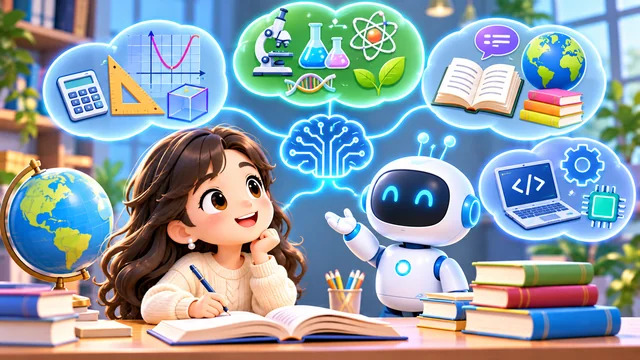
Yes, you should learn how to use AI tools—and yes, you should keep studying the subjects behind them. The two reinforce each other.
Stronger AI raises the bar for your skill: clearer goals, sharper checks, deeper context. The tool climbs; so should you.
Someone will ask, “If I learn to use AI, why learn concepts?” Because concepts are the floor under the buttons.
Learning is not a race to beat AI at memory. It is practice for understanding, judging, and fixing what tools produce.
The stronger models get, the more your clarity and ethics matter—not less.
Concepts beat calculator-only habits
Understanding basics is how you use AI well—not magic phrases alone.
In math you do not only punch a calculator—you learn why a rule works. Scientific notation, for instance, is a number from 1 up to (but not including) 10 times a power of ten: 1.3×10³ fits; so can other valid forms once you know the rule.
AI concepts work the same way. We learn them to see how systems behave, not to collect flashcards.
Say “Make me a spreadsheet.” AI still needs purpose, data, layout, and formulas. The clearer you think, the clearer you type—and the closer the result.
Concept study is also a communication upgrade: with classmates, with software, with AI apps. Bilingual labels help—Chinese for meaning, English for manuals and tools.
Coming up next
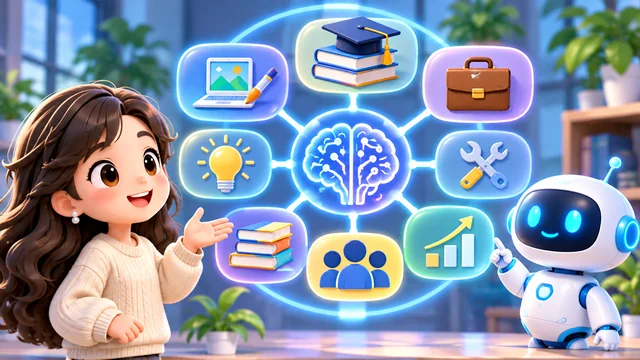
That wraps today’s special. From the next episode we return to the AI Knowledge Class roadmap: Episode 8 opens the deep dive with Prompt—how to tell AI what you want it to do.
Until then, notice one AI output you trusted today—and one fact you checked yourself. Both habits belong in the AI age.
See you in Episode 8.