Inspired by a little bird
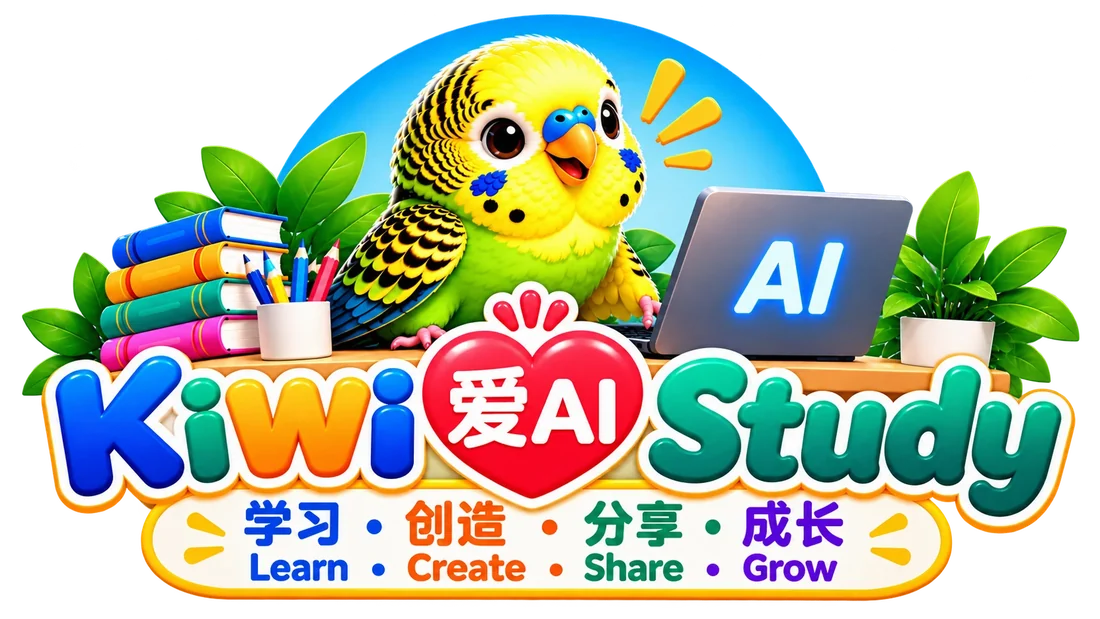
Kiwi is the name of a beloved pet budgerigar in our family. The bird brings joy, companionship, and personality to our everyday lives. That personal connection inspired the warm, friendly spirit behind our mascot and brand.
Kiwi 爱AI Study brings mathematics and artificial intelligence together through clear explanations, practical examples, and curiosity-driven learning.
A NAME WITH HEART
Kiwi is the name of a beloved pet budgerigar in our family. The bird brings joy, companionship, and personality to our everyday lives. That personal connection inspired the warm, friendly spirit behind our mascot and brand.
In Chinese, 爱 means love, and its pinyin is ài. Its sound echoes AI, bringing together a love of learning and curiosity about artificial intelligence. The heart in the logo expresses this connection through warmth, curiosity, and technology.
The name and visual identity reflect two connected interests: mathematics and artificial intelligence. They are not separate worlds. Mathematical thinking helps us understand the models, patterns, and methods that make modern AI possible.

ROOTS & INSPIRATION
Although I now live in Canada, the history, culture, and educational traditions of my hometown in China remain close to my heart.
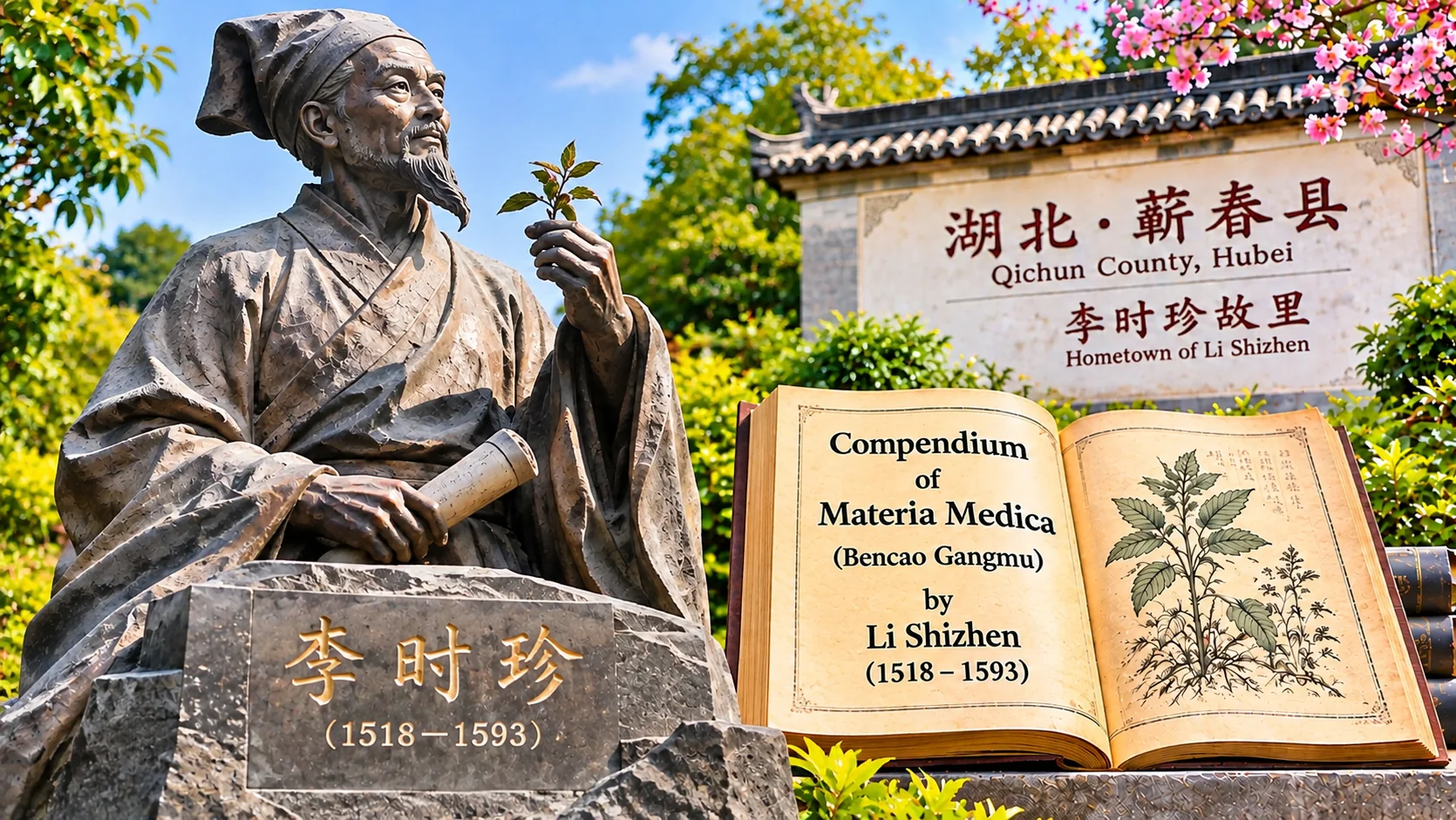
I come from Qichun County in Huanggang, Hubei Province, China. Qichun is the hometown of Li Shizhen (1518–1593), the renowned physician and author of the Compendium of Materia Medica (Bencao Gangmu). His dedication to observation, research, and knowledge remains inspiring. Qichun is also known as a “County of Professors,” reflecting its long tradition of valuing education.
Huanggang is widely recognized in China for its educational tradition. The well-known Huanggang Mijuan practice-paper series is familiar to generations of students, including its mathematics editions. For me, mathematics is more than examinations: it develops reasoning, problem-solving, and independent thinking—ideas I hope to share through KIWI 爱AI Study.
Hubei Culture & Tourism ↗
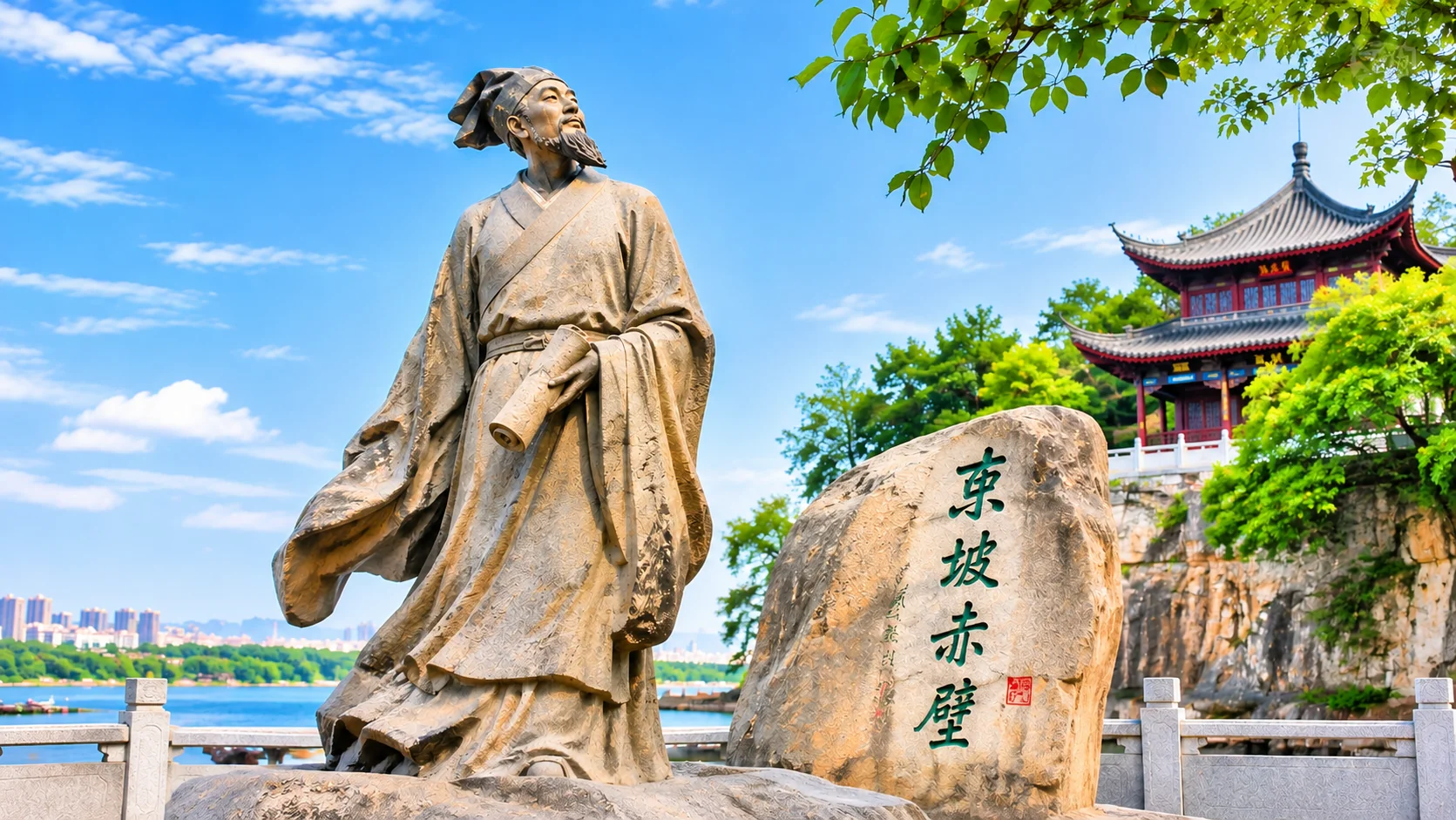
Huanggang also has a rich literary heritage. During his years in Huangzhou, the Song-dynasty writer Su Shi, better known as Su Dongpo, created celebrated works associated with the Red Cliffs. Dongpo Chibi remains a cultural landmark, reminding me of the value of creativity, reflection, and resilience.
AI-generated illustration inspired by Dongpo Chibi; not a documentary photograph.
Yiai Lake is one of Huanggang’s beautiful urban landscapes. Its calm water, green islands, and city skyline offer another side of my hometown, where nature and cultural memory meet. The name “Yiai” also recalls the legacy of Su Dongpo.
From Li Shizhen’s spirit of inquiry to Huanggang’s mathematics education, from Su Dongpo’s creativity to the beauty of Yiai Lake, these connections are part of what inspires me to keep learning and sharing.
HOW WE TEACH
The goal is not to make learning easier by removing the thinking. It is to make difficult ideas easier to enter, explore, and understand.
Use familiar situations and concrete examples to introduce unfamiliar ideas. When learners can see how a concept appears in the real world, abstract knowledge becomes more approachable.
Use diagrams, visual models, comparisons, and step-by-step explanations to reveal how an idea works — not just what formula to remember.
First understand the meaning. Then connect ideas, recognize structures, discover patterns, and see when a strategy can be applied in a new situation.
Ask why a method works, invite learners to test ideas, and treat mistakes as useful information. The aim is lasting understanding, not memorization alone.
MATH × AI
Mathematics is much more than calculation. It teaches us to take a complex situation, identify what matters, and represent it with a simpler model. From that model, we can reason, test relationships, develop rules, and recognize patterns.
These ways of thinking also help us make sense of AI. Machine learning uses data and mathematical methods to identify patterns and build models. Deep learning uses layered neural networks to learn increasingly complex representations. Large language models learn statistical patterns in language and use them to generate responses.
A strong understanding of mathematics does not mean every learner must become a mathematician. It means having the tools to think clearly, question results, understand how technology works, and participate confidently in an AI-shaped future.
A way of thinking
LET’S CONNECT
Kiwi 爱AI Study welcomes conversations with individuals, educational institutions, and organizations interested in education, mathematics learning, educational resources, and AI-powered learning.
We are open to exploring opportunities in educational content creation, curriculum and learning resource development, teaching material partnerships, technology applications, and other meaningful educational initiatives.
If you are interested in our work, vision, or projects and would like to explore a business partnership or long-term collaboration, we would be delighted to hear from you.
Contact Us About Collaboration →Together, let’s explore new possibilities in education.
OUR BELIEF
Learn • Create • Share • Grow